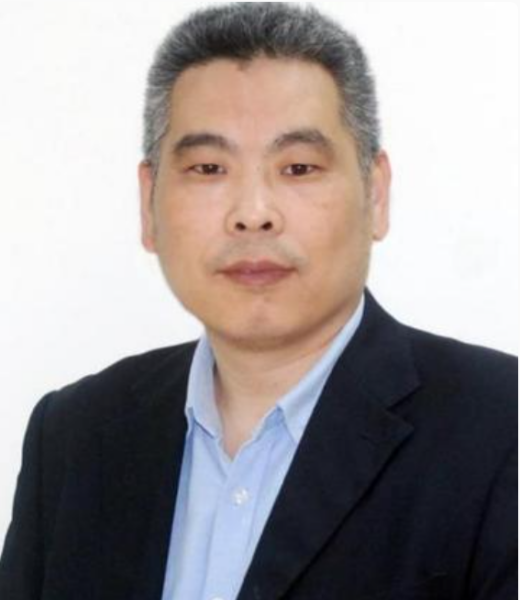
Prof. Zhaoli Guo
Huazhong University of Science and Technology (HUST), China
Professor Zhaoli Guo is a Professor and Doctoral Supervisor at Huazhong University of Science and Technology (HUST). He is a recipient of the National Science Fund for Distinguished Young Scholars and a Changjiang Scholar Distinguished Professor. Professor Guo holds several key leadership roles in the academic community, including Council Member of the Chinese Society of Engineering Thermophysics, Vice Chair of Multiphase Flow Committee, and Committee Member of the Process Simulation and Modeling Committee of the Chinese Institute of Chemical Engineers. He also serves as an Associate Editor/Editorial Board Member for prestigious journals such as Advances in Applied Mathematics and Mechanics, Scientific Reports, Science Bulletin, and Chinese Journal of Computational Physics.
His research primarily focuses on mesoscopic physical models and multi-scale numerical methods for complex transport phenomena, unconventional gas-solid two-phase flows, and the microscopic mechanisms of multiphase and multicomponent seepage. To date, he has authored one English monograph and two Chinese books, published over 150 SCI-indexed papers, which have garnered more than 23432 citations, resulting in an h-index of 67. Professor Guo’s accolades include the Second Prize of the National Natural Science Award (ranked second) and two First Prizes for Natural Science at the provincial/ministerial level. His groundbreaking research has been successfully applied to cutting-edge engineering and scientific fields, including the seepage mechanisms of CO₂ geological storage, thermal management of microchips, and neutron transport in nuclear reactors.
Title of Speech: Model of incompressible turbulent flows via a kinetic theory
Abstract: Kinetic theory offers a promising alternative to conventional turbulence modelling by providing a mesoscopic perspective that naturally captures higher-order non-equilibrium physics such as non-Newtonian effects. In this work, we present an extension and theoretical analysis of the recent kinetic model for incompressible turbulent flows developed by Chen et al. (Atmos. 14:1109, 2023), which was constructed for unbounded fully developed turbulent flows. The first extension is to reselect a relaxation time such that the turbulent transport coefficients can be obtained more consistently and are in closer agreement with well-established turbulence theory. The Chapman-Enskog (CE) analysis of the kinetic model reproduces the traditional linear eddy viscosity and gradient diffusion models for Reynolds stress tensor and turbulent kinetic energy flux at the first order, and nonlinear eddy viscosity and closure models at the second order. Particularly, a previously unreported CE solution of the turbulent kinetic energy flux is also obtained. The second extension is to enable the model for wall-bounded turbulent flows with preserved near-wall asymptotic behaviors. This involves developing a low-Reynolds number kinetic model that incorporates wall damping effects and explicit viscous diffusion, with boundary conditions enabling both viscous sublayer resolution and wall function application. Comprehensive validation against experimental and DNS data for homogeneous and inhomogeneous shear flows demonstrates excellent agreement in predicting mean velocity, turbulent kinetic energy, and Reynolds stress profiles. It demonstrates that an averaged turbulent flow behaves similarly to a rarefied gas flow at a finite Knudsen number, capturing non-Newtonian effects that cannot be represented by linear eddy viscosity models. The present kinetic model provides a physics-based foundation for turbulence modelling with reduced empirical dependence.
Prof. Yong Wang
Southeast University, China
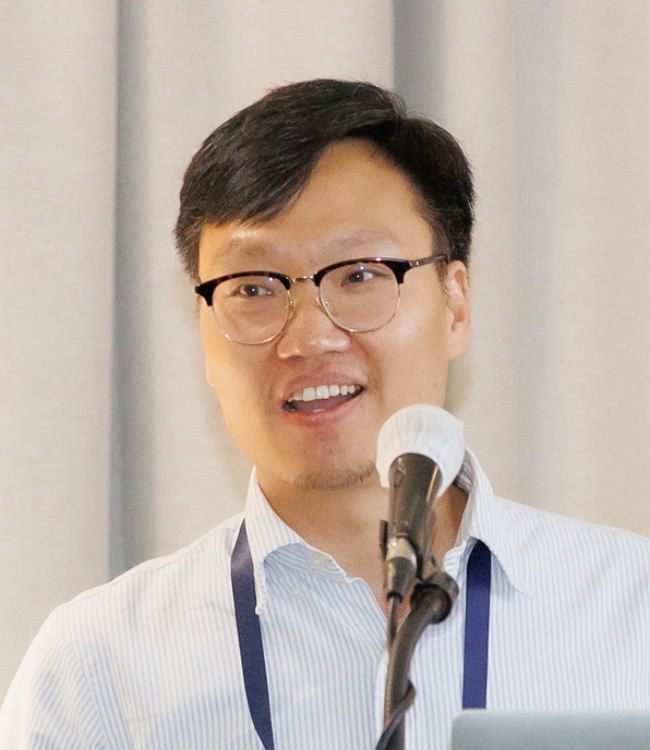
Dr. Yong Wang is a professor in the School of Mechanical Engineering at Southeast University, China, and a guest scientist in the Department of Fluid Physics, Pattern Formation, and Biocomplexity at the Max Planck Institute for Dynamics and Self-Organization (MPIDS), Germany. He received his dual bachelor’s degrees (2004) and PhD degree (2010) from Xi’an Jiaotong University, Shaanxi, China (supervised by Prof. Yaling He). From March 2015 to August 2025, he served as a Group Leader and Research Scientist at MPIDS, in Goettingen. Prior to joining MPIDS, he worked with Prof. Said Elghobashi as a postdoctoral researcher at the University of California, Irvine, USA. Dr. Wang’s current research centers on fluid flow and heat transfer and their numerical modeling, with interdisciplinary applications in e.g., mechanical engineering, biomedical engineering, and atmospheric physics.
Title of Speech: Computational Mechanics in the Heart and the Atmosphere
Abstract: This talk presents two research directions united by computational mechanics. The first focuses on the heart as a multi-physics system. We investigate cardiac muscle mechanics and fiber architecture, developing predictive models for personalized therapies such as engineered tissue implantation. We also study cardiac electrophysiology and hemodynamics to innovate defibrillation techniques and optimize patient-specific stent planning. The second addresses atmospheric non-spherical particles, which play key roles in climate and health. Combining novel experiments and particle-resolved simulations, we investigate sub-millimeter particles in air. Results reveal complex oscillation patterns and non-linear shape-dependent settling, with implications for natural particles like snowflakes and volcanic ash. Across both topics, computational mechanics serves as the unifying thread, demonstrating how engineering approaches illuminate biomechanical and environmental systems.
Prof. Bin Yang
University of Shanghai for Science and Technology, China
Professor Bin Yang is a Professor and Doctoral Supervisor at the School of Energy and Power Engineering, University of Shanghai for Science and Technology (USST). He serves as a Committee Member of the Boiler Committee under the Chinese Society of Power Engineering and as a Young Member of the Aerospace Propulsion, Combustion, and Heat Transfer Committee of the Chinese Society of Astronautics. His research primarily focuses on experimental measurement and simulation technologies for multiphase flow and combustion, as well as engine testing and evaluation techniques. Professor Yang has led over 20 research projects, including the National Natural Science Foundation of China (Youth Program) and two sub-projects under the National Key R&D Program. He has published more than 20 SCI-indexed papers as the first or corresponding author in prestigious journals such as Optics Letters, Measurement, Applied Thermal Engineering, Physics of Fluids, and Experimental Thermal and Fluid Science. As the primary inventor, he holds 9 granted invention patents. His work has been recognized with seven scientific and technological awards, including two Second Prizes of the Shanghai Technology Invention Award and the Second Prize of the Guangdong Science and Technology Progress Award.
Title of Speech: Measurement of Multiphase Flow and Combustion in Solid Rocket Motor
Abstract: Solid Rocket Motor (SRM) is widely used as the power systems for aerospace vehicles. SRM generates high-temperature and high-pressure combustion products through the combustion of solid propellants in the combustor. These products are then expanded and accelerated via the nozzle to produce thrust, during which extremely complex multiphase flow and combustion phenomena occur. Extreme environments, such as high temperatures and strong radiation, pose substantial challenges to measurement. This talk focuses on the online measurement of multiphase flow and combustion parameters during the combustion of solid propellants and the operation of SRM. It mainly elaborates on the measurement of parameters, including flame temperature, gas component concentration and particle size of condensed products, by using optical measurement techniques such as flame radiation spectroscopy and imaging methods, laser scattering and absorption spectroscopy, which offers significant support for the research on the combustion mechanism of solid propellants and the performance optimization of SRM.
Prof. Penghao Duan
University of Hong Kong, Hong Kong, China
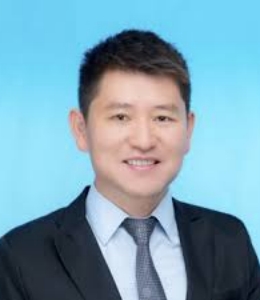
Prof. Duan Penghao is currently an Assistant Professor in the Department of Mechanical Engineering at the University of Hong Kong. He obtained dual bachelor’s degrees from Tongji University and Polytechnic University of Milan. He completed his master’s degree at ETH Zürich, during which he conducted his thesis at the MIT Gas Turbine Laboratory as a ZKS-funded Visiting Scholar. After completing his master’s studies, he gained industry experience at ACAE (AECC Commercial Aircraft Engines), China’s first commercial aeroengine company. He then earned his doctoral degree from the University of Oxford, where he subsequently worked as a postdoctoral researcher. Prior to joining the University of Hong Kong, he began his faculty career as an Assistant Professor at City University of Hong Kong.
He has received the ASME IGTI Turbo Expo Early Career Engineer Travel Award and the ASME IGTI Student Advisory Committee Travel Award. He has served as a session chair at leading international conferences, including ASME Turbo Expo, GPPS, and CITC, and has also served as a Guest Editor for the journal Machines. As a supervisor, his students have received the American Physical Society Distinguished Student Program Award, the NSFC Youth Science Foundation, and the NSFC PhD Student Scheme.
Title of Speech: Optimization of Fully Cooled Turbine Blade Using Multi-Scale Computational Fluid Dynamics Algorithms
Abstract: Gas turbines are becoming critical power sources for aviation, AI data centers, and emerging low-altitude economy applications. The efficiency of a gas turbine is strongly influenced by the turbine inlet temperature (TIT). To enable continuously increasing TIT, approaching 2000 °C, sophisticated cooling technologies are required to prevent turbine blades from melting down. However, the design of fully cooled turbine blades remains highly iterative, typically involving repeated interactions between aerodynamic and heat-transfer design teams. This challenge arises primarily from the multi-scale nature of the problem, where large geometric disparities exist between millimeter-scale cooling holes and centimeter-scale turbine blades, creating significant difficulties in geometry parameterization, mesh generation, and computational fluid dynamics (CFD) simulations.
To address this multi-scale challenge, this talk presents an algorithmic framework for the optimization of fully cooled turbine blades. A unified parameterization system is first developed to represent blade geometry and cooling configurations, including film-cooling, double-wall cooling, and serpentine internal cooling channels. Inverse parameterization techniques are introduced to extract blade geometries from literature and experimental datasets, enabling the construction of a large blade geometry database. Automated mesh-generation algorithms for both structured and hybrid meshes are then developed to accommodate complex cooling configurations. Finally, a multi-scale computational algorithm is proposed to achieve high-fidelity and computationally efficient simulations by extracting and propagating three-dimensional contoured source terms from local fine meshes to coarse global meshes. The proposed framework enables blade parameterization, automated mesh generation, and computationally affordable simulation for fully cooled turbine blades, providing a practical pathway toward AI-assisted and non-iterative aerothermal optimization of gas turbine blades.