AAME Invited Speaker
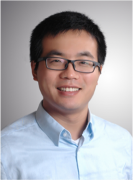
Prof. Yuan Xiong, Beihang University, China
熊渊教授,北京航空航天大学
Biography: Dr. Yuan Xiong is a professor at Beihang University, China, and a recipient of the National Youth Talent Program. He received his PhD degree (2015) from the Clean Combustion Research Center at King Abdullah University of Science and Technology (KAUST), Saudi Arabia. Subsequently, he joined the CAPS Laboratory at ETH Zurich, Switzerland, as a postdoctoral researcher. In July 2021, he returned to China to join Beihang University and was promoted to professor in January 2022. Prof. Xiong's current research centers on combustion and fluid mechanics, with over 20 papers published in authoritative journals such as Proceedings of the Combustion Institute and Journal of Fluid Mechanics. He hosts projects including the National Natural Science Foundation of China and the Beihang Young Elite Scientist Program.
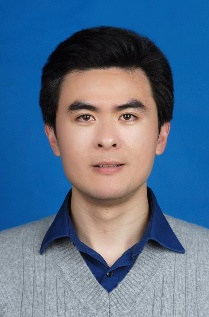
Prof. Zhaolin Chen, Nanjing University of Aeronautics and Astronautics, China
陈肇麟教授,南京航空航天大学
Biography: Dr. Zhaolin Chen earned his MEng in Aerospace Engineering in 2009 and his Ph.D. in Aerodynamics in 2014,
both from the University of Sheffield, UK. Following his Ph.D., he began his career as a Post-Doctoral Research
Associate at the same institution, working under Professor Ning Qin.
From 2015 to 2018, he served as a Senior Engineer in the Turbomachinery Design Department at FlaktGroup Ltd
in the UK. In 2019, he joined the Department of Aircraft Design at Nanjing University of Aeronautics and
Astronautics (NUAA).
His research focuses on developing computational methods for solving governing fluid flow equations and
advancing optimization techniques. Specific areas of expertise include steady and unsteady flow simulation,
mesh deformation techniques, optimization, and aerodynamic-structural coupling. His work is applied to
aerodynamic and aeroacoustic simulation and optimization of wings and rotor blades. Recently, he has
concentrated on designing aerial vehicles for Mars, involving the development of multi-fidelity codes for rotor
design, aero-structural design of rotors, and experimental testing in Martian environments.