
Special Session

Special Session

Special Session 3 ← All Special Sessions

Advanced Computational Methods and AI-Driven Modeling in Engineering Applications

先进计算方法与人工智能驱动建模及其工程应用

Overview | 专题简介

Recent advances in computational methods and artificial intelligence (AI) have opened new opportunities for addressing complex problems in engineering mechanics. Advanced numerical techniques, including finite element methods, boundary element methods, meshfree methods, and multiscale computational approaches, have become indispensable tools for understanding the mechanical behavior of complex materials and structures. Meanwhile, emerging AI-driven modeling techniques, such as physics-informed neural networks, deep learning, and neural operators, offer promising strategies for improving computational efficiency, accuracy, and adaptability in engineering simulations.

This special session aims to bring together researchers and engineers working on advanced computational methods, AI-driven modeling, and their applications to challenging engineering problems. Particular emphasis will be placed on the integration of traditional numerical techniques with emerging machine learning approaches to develop accurate, efficient, and reliable computational frameworks. The session will provide a platform for presenting recent theoretical developments, innovative numerical algorithms, and practical engineering applications across computational mechanics, aerospace engineering, mechanical engineering, and related disciplines. By fostering interdisciplinary exchanges between computational mechanics and artificial intelligence, this session seeks to promote innovative computational methodologies and accelerate their translation into practical engineering solutions.

Related Topics | 征稿主题

01Advanced finite element, boundary element, and meshfree methods
02Physics-informed neural networks and scientific machine learning
03AI-enhanced numerical methods and hybrid computational frameworks
04Neural operators, surrogate modeling, and reduced-order methods
05Computational fracture mechanics, damage, and failure analysis
06Multiscale and multiphysics modeling and simulation
07Inverse problems, optimization, and uncertainty quantification
08High-performance computing and efficient numerical algorithms
09Structural mechanics, dynamics, and nonlinear analysis
10Engineering applications in aerospace, mechanical systems, and advanced materials

Chairs & Organizers | 主席与组织者

Prof. Zhuojia Fu
Prof. Zhuojia Fu Chair
Professor, College of Mechanics and Engineering Science, Hohai University, China

Dr. Zhuojia Fu is a Professor at Hohai University. He is an Alexander von Humboldt Scholar and a doctoral supervisor. He currently serves as a member of the Computational Mechanics Committee of the Chinese Society of Theoretical and Applied Mechanics, the Technical Committee on Fractional-Order Systems and Control of the Chinese Association of Automation, the Computational Acoustics Committee of the Acoustical Society of China, the Board of Directors of the International Chinese Association for Computational Mechanics, the Board of Directors of the Chinese Society of Metamaterials, and the National Liaison Committee for Engineering Computational Methods. He also serves as Vice Chair of the Information Technology Committee of the Jiangsu Society of Theoretical and Applied Mechanics. Prof. Fu has been recognized as an Elsevier Highly Cited Chinese Researcher and has been included in the Stanford University World's Top 2% Scientists List. He has served as Principal Investigator for numerous competitive research projects funded by the National Natural Science Foundation of China (NSFC), including the Excellent Young Scientists Fund, General Program, and Young Scientists Fund. He is currently an Associate Editor of Engineering Analysis with Boundary Elements and serves on the Editorial Boards of Acta Mechanica Solida Sinica and Mechanics in Engineering.

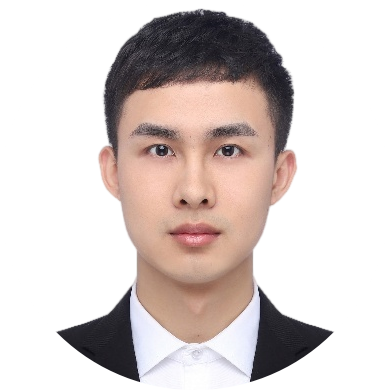
Prof. Fajie Wang
Prof. Fajie Wang Co-chair
Professor, College of Mechanical and Electrical Engineering, Qingdao University, China

Dr. Fajie Wang received a PhD degree in fluid mechanics from Hohai University, Nanjing, China, in 2018. He is currently a professor at the College of Mechanical and Electrical Engineering, Qingdao University, China. He has authored or coauthored more than 120 publications in journals, which have been cited nearly 3,200 times on Google Scholar. He was awarded DAAD-K.C. Wong Postdoc Fellowships. His research interests include computational mechanics, machine learning, boundary element method and meshless method.

Assoc. Prof. Qiang Xi
Assoc. Prof. Qiang Xi Co-chair
Associate Professor, College of Mechanics and Engineering Science, Hohai University, China

Dr. Qiang Xi is an Associate Professor at Hohai University. His research focuses on structural-acoustic coupling analysis in marine environments. He has served as Principal Investigator for seven research projects, including the Young Scientists Fund of the National Natural Science Foundation of China (NSFC), the National Postdoctoral Program for Innovative Talents (Category B), and the Jiangsu Outstanding Postdoctoral Program. His research achievements were recognized by the Top Ten Scientific and Technological Advances in Jiangsu Industry Sectors in 2022 and the First Prize of the Science and Technology Award of the Jiangsu Society of Theoretical and Applied Mechanics in 2025. He has published more than 30 peer-reviewed papers in leading international journals, including Computer Methods in Applied Mechanics and Engineering, Computational Mechanics, and Ocean Engineering. His publications have received over 1000 citations, with three papers selected as ESI Highly Cited Papers. He is the inventor of two authorized invention patents and serves as a Young Editorial Board Member of the Chinese Journal of Applied Mechanics and Mechanics in Engineering.

Submission & Key Dates | 投稿与重要日期

Submission Guideline / 投稿指南

Template Download: Formatting.doc(文章模板下载)

Please log in the Submission link (.pdf only) to submit your full paper and abstract.

欢迎点击投稿链接进行系统投稿(全文或者摘要),只有全文投稿才有出版资格。

Key Dates / 重要日期

  • December 10, 2026 | 2026年12月10日Abstract or Full Paper Submission Due
  • January 10, 2027 | 2027年1月10日Notification of Acceptance / Rejection
  • January 30, 2027 | 2027年1月30日Registration ends